Why is Drum Storage Essential for Safe and Efficient Chemical Management?
Effective drum storage is crucial for the safe management of chemicals. According to Dr. Emily Cartwright, an expert in hazardous material safety, “Proper drum storage protects both the environment and worker safety.” This highlights the significance of effective storage practices.
When chemicals are stored in drums, safety becomes a top priority. Improper storage can lead to spills or leaks, posing risks to individuals and the environment. Companies must invest in appropriate storage solutions, ensuring compliance with safety regulations. The placement of drums should be calculated, leaving adequate space for ventilation and easy access.
Yet, challenges remain in drum storage. Many facilities struggle with inadequate training for employees handling chemicals. Employee awareness is key. Regular training sessions can address these issues. Investing in proper drum storage systems is not just a legal requirement, but also a moral one. Organizations must reflect on their current practices and continuously seek improvements.

Importance of Drum Storage in Chemical Safety Protocols
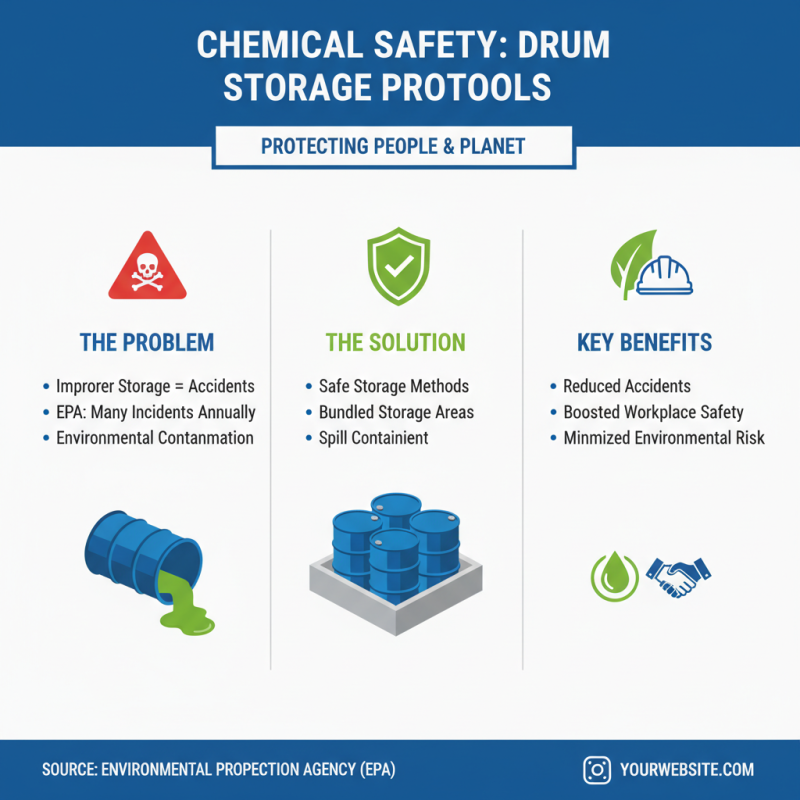
Drum storage plays a crucial role in chemical safety protocols. According to the Environmental Protection Agency, improperly stored chemicals lead to numerous accidents each year. The right storage methods can significantly reduce these incidents. For instance, using bunded areas for drum storage can contain spills. This reduces environmental contamination risks and boosts workplace safety.
Essentially, the design and layout of storage areas matter. Chemicals of different compatibility should not be stored together. A report from the National Fire Protection Association highlights that mixed chemical storage increases fire hazards. Clearly, following updated safety guidelines is key to ensuring proper management. However, many facilities still lack these measures.
Training personnel on safe handling is equally important. A study showed that 30% of workers did not receive proper chemical safety training. This knowledge gap can lead to serious mistakes and accidents. Continuous education about safe drum storage practices can mitigate these issues. Investing time and resources in training ensures everyone is aware of the potential dangers. Routine inspections can also identify storage issues before they escalate.
Key Benefits of Efficient Chemical Management with Drum Storage
Efficient chemical management is crucial in various industries. Drum storage plays a significant role in this process. With proper drum storage, companies can minimize spills and leaks. According to the National Institute of Health, nearly 25% of hazardous waste incidents are linked to improper storage.
Tips: Regularly inspect drums for leaks. Use proper labels to identify contents.
Drum storage not only ensures safety but also boosts efficiency. An organized storage system saves time and reduces operational risks. A study from the Chemical Safety Board highlights that poor labeling can lead to mismanagement. Mismanaged chemicals can cause delays and increase costs.
Tips: Implement a color-coded labeling system. Train staff on safety protocols.
Regular training and audits can further enhance chemical management. Facilities that invest in drum storage often see reductions in waste disposal costs by up to 30%. This makes drum storage more than just a safety measure; it enhances overall productivity.
Best Practices for Drum Storage in Chemical Facilities
Drum storage plays a crucial role in chemical management. Proper storage helps prevent leaks and ensures safety. Chemicals can be hazardous if not contained correctly. Adequate space is essential for storage areas. Enough room allows for easy access and reduces the risk of accidents.
When storing drums, consider the surface beneath them. A solid, level surface prevents tipping and spills. Using pallets is common but make sure they are strong and stable. This small detail can save a lot of trouble.
**Tips:** Always label each drum clearly. Labels help identify contents quickly. Ensure they are readable and durable. Regular inspections are vital. Look for rust, leaks, or damage. Address any issues immediately to avoid larger problems. Store incompatible chemicals separately to minimize risks. This practice can drastically reduce the chance of dangerous reactions.
Environmental Impact of Proper Drum Storage Solutions
Proper drum storage plays a crucial role in minimizing environmental impacts. According to the U.S. Environmental Protection Agency (EPA), ineffective chemical storage can lead to spills. These spills can contaminate soil and water. In fact, the EPA estimates that over 70% of hazardous waste spills result from improper storage practices.
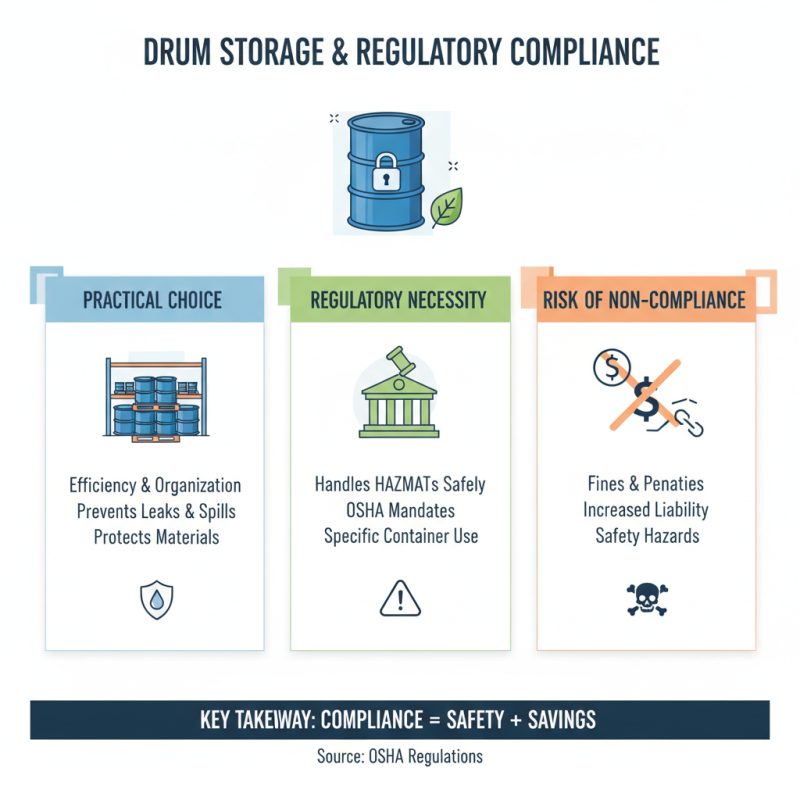
Efficient drum storage systems can mitigate these risks significantly. Data from the National Chemical Safety Institute indicates that facilities implementing best practices reduce spill incidents by 50%. This improvement leads to better community health and ecosystem preservation. Proper containment measures also support regulatory compliance. Non-compliance can cost companies heavily, financially and reputationally.
Despite these benefits, many facilities still struggle with optimal storage solutions. Research shows that about 30% of companies lack adequate training for staff. Without proper training, mistakes occur. An alarming number of accidents stem from human error. Investing in education and infrastructure is vital for safe chemical management. Each step toward improvement helps protect our environment and community well-being.