What is Liquid Hand Sanitizer and How Does it Work?
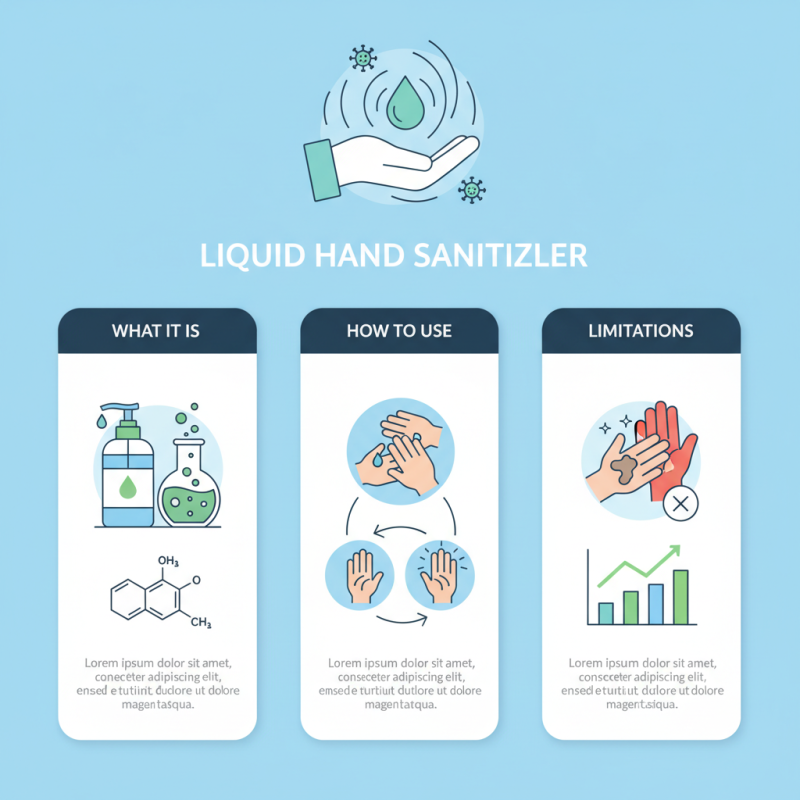
Liquid Hand Sanitizer has become a staple in maintaining hygiene, especially during health crises. This clear, often fragrant gel is designed to reduce germs on our hands. It contains alcohol, typically between 60% to 95%, which is effective in killing bacteria and viruses.
Using Liquid Hand Sanitizer is simple. You apply a small amount to your hands and rub them together. The sanitizer must cover all surfaces of your hands, including between fingers and under nails. Some people may apply too little, while others may not rub long enough for it to be effective.
While Liquid Hand Sanitizer is convenient, it isn't infallible. It may not eliminate all types of germs, especially if hands are visibly dirty or greasy. Additionally, over-reliance on it can lead to skin irritation for some users. Awareness of its limitations is crucial for effective hand hygiene. Understanding how it works can help individuals use it wisely in their daily routines.
What is Liquid Hand Sanitizer?
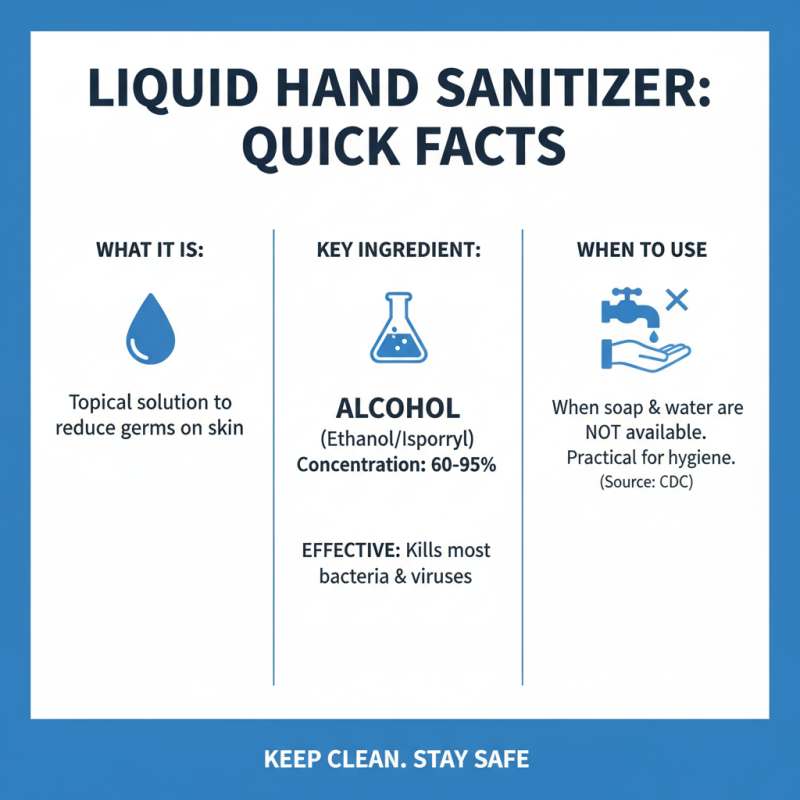
Liquid hand sanitizer is a topical solution designed to reduce germs on the skin. It usually contains alcohol, such as ethanol or isopropyl, in concentrations of 60% to 95%. This high alcohol content is effective in killing most bacteria and viruses. According to the Centers for Disease Control and Prevention (CDC), when soap and water are unavailable, hand sanitizer is a practical alternative for hygiene.
The mechanism of liquid hand sanitizer is straightforward. Alcohol works by denaturing proteins and disrupting the cell membranes of germs. However, it is important to apply enough product to cover all surfaces of the hands and rub them together for at least 20 seconds. Many users underestimate the amount needed, which can lead to ineffective sanitization. A study published in the American Journal of Infection Control found that nearly 30% of people do not use enough sanitizer for it to be effective.
Despite its convenience, liquid hand sanitizer is not a perfect solution. It may not remove all types of germs, particularly certain viruses or spores. Additionally, its effectiveness can diminish if the hands are visibly dirty or greasy. As a result, relying solely on hand sanitizer without regular handwashing is not advisable. Awareness of these limitations is crucial for promoting better hygiene practices.
The History and Development of Hand Sanitizers
The history of hand sanitizers dates back to the early 1960s. Scientists began exploring antiseptic solutions for preventing infections. They sought effective ways to eliminate germs without using soap and water. Initially, these sanitizers were developed for healthcare settings. The goal was to protect patients from hospital-acquired infections.
In the 1980s, alcohol-based sanitizers gained popularity. They proved to be more effective than those containing non-alcohol ingredients. These early liquid hand sanitizers included isopropyl alcohol and ethanol. Their ability to kill a wide range of germs made them essential in many environments. However, not everyone accepted them. Some people were skeptical about their efficacy and safety.
The COVID-19 pandemic significantly boosted the use of hand sanitizers. People became more aware of the importance of hygiene. Unfortunately, this surge led to shortages and questionable quality products. Many homemade sanitizers emerged, lacking proper safety measures. Such issues remind us to value quality over quantity in hygiene products. Hand sanitizers must be used wisely, as they are not a substitute for washing hands.
What is Liquid Hand Sanitizer and How Does it Work? - The History and Development of Hand Sanitizers
| Year |
Development Stage |
Key Features |
Active Ingredients |
Effectiveness |
| 1966 |
Introduction |
First liquid hand sanitizer invented. |
Ethanol |
Effective against bacteria. |
| 1988 |
Wide Acceptance |
Increased use in healthcare settings. |
Isopropyl Alcohol |
Broad-spectrum antimicrobial activity. |
| 2000 |
Regulatory Standardization |
Regulatory agencies establish effectiveness standards. |
Ethyl Alcohol, Benzalkonium Chloride |
Effective against viruses and bacteria. |
| 2020 |
COVID-19 Pandemic |
Surge in production and usage. |
60-95% Alcohol solutions |
Highly effective against SARS-CoV-2. |
Key Ingredients in Liquid Hand Sanitizer
Liquid hand sanitizer has gained significant importance, especially during health crises. Its primary purpose is to reduce germs on the hands. Understanding the key ingredients can help individuals make informed choices.
The main ingredient in most liquid hand sanitizers is ethyl alcohol, usually between 60% to 95%. Studies from the CDC indicate that alcohol-based sanitizers effectively kill 99.9% of most germs. This high alcohol concentration is crucial. Glycerin is often added to prevent skin dryness, making the product more user-friendly. It acts as a humectant, pulling moisture into the skin. However, alcohol can still be harsh. Some users may experience irritation.
Another essential component is hydrogen peroxide. It helps stabilize the formula and ensures its efficacy. The World Health Organization (WHO) recommends formulations containing hydrogen peroxide for their broad-spectrum antimicrobial properties. Even with effective ingredients, sanitation practices can vary. People may not use enough product or allow it to dry completely. This highlights a common area for improvement in hand hygiene habits. With awareness and understanding of key ingredients, better practices can be encouraged.
How Liquid Hand Sanitizer Kills Germs and Bacteria
Liquid hand sanitizer is designed to eliminate germs and bacteria effectively. Its primary ingredient is alcohol, usually ethanol or isopropyl alcohol. When applied to the hands, the alcohol disrupts the cell membranes of microorganisms. This process is crucial. It essentially kills over 99% of germs on contact.
However, there are limitations. Not all pathogens are susceptible to alcohol. Some viruses and bacteria can survive this treatment. Additionally, improper application reduces efficiency. Many people do not use enough product or fail to cover all surfaces. Rushing through the process diminishes its effectiveness. It's also important to allow the product to dry completely, as wiping it off prematurely can lead to subpar results.
It's worth noting that hand sanitizer should not replace handwashing with soap and water. Soap is better for removing dirt and certain types of germs. Liquid hand sanitizers are a great alternative when soap and water aren’t available, but they are not infallible. Users must remain aware of these nuances for optimal hand hygiene.
Proper Usage and Effectiveness of Liquid Hand Sanitizer
Liquid hand sanitizer is a convenient solution for maintaining hand hygiene. It typically contains alcohol, which effectively kills germs on the skin. However, its effectiveness can vary depending on the concentration of alcohol used. A liquid sanitizer should contain at least 60% alcohol for optimal germ-fighting ability. Users often underestimate how much they need to apply. A small amount isn’t always enough to cover all surfaces of the hands thoroughly.
Proper usage involves an adequate application of the product. It should be rubbed over all surfaces of the hands for at least 20 seconds. Many people rush this process, missing areas like between the fingers and under the nails. Distraction can lead to ineffective cleaning. It's easy to forget, but these details matter. After using sanitizer, allow it to dry completely. This ensures maximum effectiveness against pathogens.
Despite the convenience, liquid hand sanitizer isn't a substitute for washing hands. Soap and water should always be the first choice when available. Some might feel confident relying solely on sanitizer. This can be a risky mindset. The reality is, in certain situations, washing hands is more effective. Recognizing these nuances can help improve hygiene practices.