Choosing the Best Chemical Locker Manufacturer in China requires more than comparing prices or polished product photos. A reliable supplier must control material quality, fire resistance, corrosion protection, and production consistency. Small details matter. Door alignment, hinge strength, shelf loading, and spill containment can affect daily safety.
Grand View Research’s 2024 Chemical Storage Cabinets Market report identifies stricter workplace safety requirements and industrial expansion as major market drivers. NFPA 30, 2024 Edition, also emphasizes suitable storage, fire protection, and compatibility between chemicals and storage equipment. These references show why a Chemical Locker should be evaluated against documented performance, not marketing language. Buyers should request steel specifications, coating details, fire-test evidence, inspection records, and clear maintenance guidance.
James A. Kaufman, founder of the Laboratory Safety Institute, is widely quoted as saying, “Safety is not expensive, it’s priceless.” His principle fits chemical storage perfectly. However, one weakness remains common: many purchasing teams review the cabinet, but not the manufacturer’s process. That is an incomplete assessment.
The best Chinese manufacturer should demonstrate traceable raw materials, controlled welding, accurate labeling, and repeatable inspection procedures. Ask for factory photographs. Request sample testing. Verify export experience and technical support. A low price may look attractive, yet replacement costs and downtime can quickly change the calculation. Certification alone is not enough. Practical evidence matters more.
This guide examines how to identify a dependable Chemical Locker manufacturer in China, while recognizing an uncomfortable truth: no cabinet compensates for poor chemical segregation, careless handling, or weak workplace training.
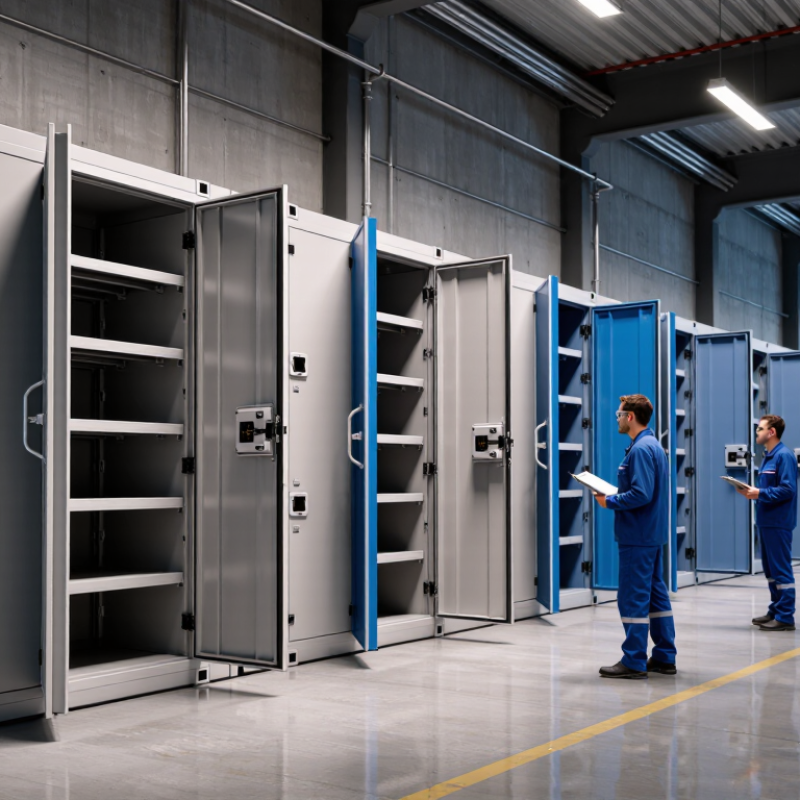
What defines a chemical locker manufacturer is not a polished catalog. It is controlled engineering, tested materials, and traceable production. NFPA 30 recommends limiting flammable liquids in storage cabinets to 120 gallons, with no more than 60 gallons of Class I, II, and IIIA liquids. A capable manufacturer should understand these limits and design around real site conditions. Door seams, ventilation ports, adjustable shelves, and spill containment all matter. So does the test evidence.
Look beyond steel thickness. Ask for fire-resistance test reports, coating specifications, load ratings, and batch-level quality records. EN 14470-1 evaluates fire-resistant safety cabinets through defined fire tests, including temperature limits and resistance time. A reliable factory should explain these results clearly, not hide behind vague certificates. It should also provide inspection photos, dimensional drawings, and replacement-part support. In practice, a 900 mm cabinet may look ideal online but fail when a laboratory needs larger containers, secondary containment, or restricted access. That gap deserves honest review.
Tips: Check weld consistency around corners. Test the self-closing doors. Confirm the shelf load rating in writing. Review the factory’s experience with your chemical categories, climate, and installation space. A cheaper cabinet may still be acceptable, but only after its evidence is checked. Even experienced buyers can overlook airflow and spill volume. That is the uncomfortable part.
Best Chemical Locker Manufacturer in China?
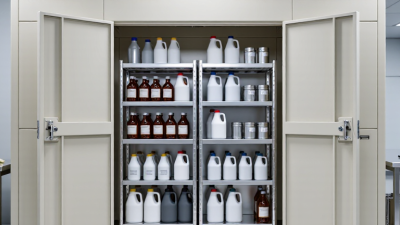
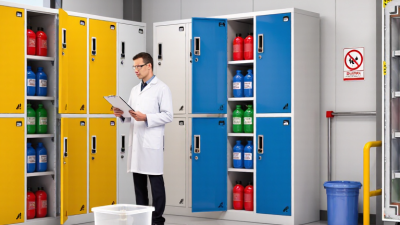
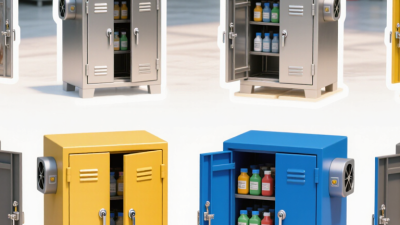
Chemical lockers are not one-size-fits-all storage units. Their design should match the chemical hazard, container size, and working environment. Flammable storage cabinets usually use steel construction, self-closing doors, spill-control shelves, and fire-resistant features. They suit paint rooms, maintenance areas, laboratories, and production workshops.
Corrosive storage cabinets often use polyethylene or coated materials. These resist damage from acids, alkalis, and chemical vapors. Separate acid and base compartments can reduce dangerous reactions. In water-treatment facilities, plating workshops, and research laboratories, this separation matters daily. Small cabinets support bench work, while larger units store drums or multiple containers. Gas cylinder lockers provide ventilation, restraint chains, and clear access control. They are useful near fabrication lines, laboratories, and process equipment.
A chemical locker manufacturer should understand these operating details, not only sheet-metal production. Check load capacity, hinge strength, shelf adjustability, ventilation design, labeling space, and surface resistance. Factory inspection records and material documentation also deserve attention. A perfect locker rarely exists. Real facilities often compromise between footprint, budget, and safety. That compromise needs careful review. An experienced manufacturer should explain limitations honestly and recommend different cabinet types when one solution cannot serve every chemical. Users should also confirm local workplace requirements before installation, because storage expectations can vary by site and application.
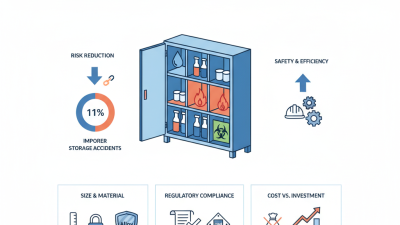
Choosing the best chemical locker manufacturer in China requires more than comparing prices. Inspect the factory’s production records, material specifications, and quality procedures. A reliable manufacturer should explain steel grades, coating thickness, shelf capacity, and spill-containment design clearly. Ask whether seams are welded or folded. Small details affect long-term safety.
Look for test reports from recognized laboratories and verify their validity. Check corrosion resistance, ventilation performance, door strength, grounding options, and fire-rated construction where required. The manufacturer should also provide drawings, inspection records, and traceable batch information. A sample locker can reveal uneven paint, weak hinges, or poor alignment quickly. One practical lesson is simple: polished brochures do not prove manufacturing ability.
Tips: Visit the facility if possible. Watch how workers prepare surfaces before coating. Ask to inspect a finished unit under bright light. Request a sample, not only photographs. Confirm export packaging, replacement parts, warranty terms, and response times. Do not accept vague claims about compliance. Ask which standards apply to your location and product type. I have seen promising projects fail because dimensions were assumed rather than confirmed. A written checklist prevents that mistake. Also, leave room for improvement; even a strong supplier may need clearer documentation or better final inspection. Reliability grows through evidence, communication, and repeatable testing.
Choosing a chemical locker manufacturer in China requires more than comparing steel thickness or price. Materials must match the stored hazard. Double-wall powder-coated steel suits many flammable liquids. Polyethylene resists acids and alkalis better. Stainless steel can support demanding corrosive environments, but it is not automatically suitable for every chemical.
Safety details matter. Adjustable shelves should carry verified load ratings. Doors need secure latches, spill-retaining lips, and clear hazard labels. Vent connections must avoid unsafe vapor release.
These are not decorative numbers. Testing evidence must support them. The ILO reported nearly 3 million work-related deaths globally in 2023, reminding buyers that small design failures can have serious consequences.
Request test reports, material certificates, door-cycle records, and factory inspection evidence. Confirm alignment with local rules, SDS instructions, NFPA 30, OSHA requirements, or EN 14470-1. A certificate alone is not enough. Inspect welds, hinges, seals, and coating quality. I would also question impressive claims without traceable laboratory records. A cabinet may pass a checklist yet perform poorly after rough transport or incorrect installation.
Choosing the best chemical locker manufacturer in China requires more than comparing prices. Customization should begin with your storage environment, container sizes, ventilation needs, shelf loads, and available floor space. A professional manufacturer can provide drawings before production and adjust door direction, locking systems, spill-control trays, and corrosion-resistant coatings. Small details matter. A 10-millimeter mismatch can affect installation.
Quality control should be visible, not merely promised. Ask for material certificates, welding inspection records, coating-thickness results, and load-testing photos. Reliable factories usually inspect steel before cutting, check cabinet dimensions during assembly, and test doors before packing. Sample approval is useful, but it cannot replace final inspection. One practical lesson is easy to miss: even a well-made locker may fail when packaging is weak. Request corner protection, moisture barriers, pallet details, and container-loading photos.
Tips: Share accurate drawings and storage requirements early. Confirm export documents, packing lists, product labels, and destination-port terms in writing. Ask whether the manufacturer supports pre-shipment inspection and replacement parts. Clarify who handles damaged goods and how quickly responses are provided. A factory may offer many options, yet excessive customization can increase cost and delivery time. Keep the design focused. Reliable communication, traceable inspections, and honest limitations often show more professionalism than polished sales language.
| Evaluation Dimension | Recommended Requirement | Practical Verification Point | Export Consideration |
|---|---|---|---|
| Chemical Compatibility | Select materials according to the chemicals stored, including acids, alkalis, solvents, and oxidizers. | Request a written material compatibility assessment and review the chemical resistance of coatings, liners, seals, and shelves. | Provide material specifications and safety documentation in English for customs, users, and installers. |
| Construction Material | Common options include powder-coated steel, stainless steel, polypropylene, and other chemically resistant plastics. | Confirm material grade, sheet thickness, weld quality, surface treatment, and resistance requirements before production. | Use consistent material descriptions on quotations, invoices, packing lists, and technical files. |
| Safety Features | Include stable shelving, spill containment, secure doors, warning labels, and appropriate ventilation provisions where required. | Check shelf load rating, cabinet stability, door alignment, lock operation, and the usable volume of spill trays. | Safety labels should be durable, legible, and suitable for the destination country’s language and regulations. |
| Customization Capability | Support custom dimensions, shelf layouts, door configurations, colors, locks, casters, vents, labels, and electrical accessories. | Approve a technical drawing showing overall dimensions, clear internal space, mounting points, and accessory locations. | Confirm that the customized design fits the destination site, pallet dimensions, container limits, and installation route. |
| Quality Control | Use documented incoming-material inspection, in-process checks, final inspection, and traceable corrective actions. | Ask for inspection records covering dimensions, coating appearance, welds, hardware, doors, shelves, and packaging. | A pre-shipment inspection can verify quantity, workmanship, labeling, and packing before dispatch. |
| Applicable Standards | Identify the standards required for the product type and destination, such as storage, workplace safety, electrical, or transport rules. | Request the exact standard edition, test scope, and certificate owner instead of relying only on general compliance claims. | The importer remains responsible for confirming local legal requirements and whether a certificate is accepted in the destination market. |
| Fire and Ventilation Requirements | Flammable-liquid storage, corrosive storage, and general chemical storage may require different cabinet designs and operating controls. | Confirm whether ventilation, fire resistance, grounding, self-closing doors, or segregation is required for the intended chemicals. | Do not treat a general chemical cabinet as automatically suitable for flammable or regulated substances. |
| Documentation Package | Provide a user manual, installation instructions, packing list, product drawings, inspection report, and maintenance guidance. | Ensure documents match the actual model, configuration, dimensions, accessories, and serial or batch information. | Typical export paperwork may include a commercial invoice, packing list, transport document, and certificate of origin when required. |
| Packaging and Logistics | Use moisture protection, corner protection, internal cushioning, suitable pallets, and clear handling marks. | Review the packing method, gross weight, package dimensions, lifting points, and protection against corrosion or impact. | Confirm Incoterms, shipment method, container loading plan, export packing requirements, and responsibility for freight damage. |
| Production Lead Time | Lead time should be stated separately for design approval, sample production, mass production, inspection, and shipment preparation. | Obtain a written schedule with approval milestones and identify which changes may affect the delivery date. | Allow additional time for documentation review, port procedures, customs clearance, and destination delivery. |
| After-Sales Support | Clarify warranty coverage, spare parts, replacement hardware, technical support, and procedures for quality claims. | Confirm response channels, claim evidence requirements, replacement policy, and availability of commonly replaceable parts. | Define who handles import duties, local service, return freight, and on-site installation before placing the order. |
This website uses cookies. By continuing to browse this site you are agreeing to our use of cookies. Please review our Privacy Policy for more information.